Sport basics are the set of fixed constraints — court dimensions, equipment limits, scoring rules, and the physical principles that govern how a ball or shuttle behaves — that determine what technique is even possible in a given sport. Learning them first is not homework; it is the shortcut. A player who knows the badminton court is 13.40 m long and that the net sits at 1.55 m at the posts but 1.52 m at the center understands immediately why a flat drive down the middle behaves differently from one down the tramlines, and why the drop shot — a soft shot played so the shuttlecock just clears the net and falls quickly near the front of the opponent's court — is a weapon rather than a bail-out. Everything below is the working knowledge a new player or spectator needs before spending money, joining a league, or arguing about a line call.
The playing area and what its dimensions actually force you to do
A badminton court is 13.40 m long, and 6.1 m wide for doubles. Those two numbers explain most of the movement you see at a decent level. The length is short enough that a well-struck clear can travel from the back of one court to the back of the other on a flat trajectory, and long enough that a player standing on the back boundary still has to cover a diagonal drop to the front corner in a handful of steps. The singles court is narrower than doubles, which is why singles players spend so much time on the long diagonal and why doubles pairs can afford to stand side by side and cover the width between them.
The net is the part beginners underestimate. It measures 1.55 m at the posts and 1.52 m at the center, so it sags slightly in the middle. That sag matters. The center of the net is the lowest point and the place where a tight net shot is least likely to be called a fault, and it is also the point a shuttle is most likely to clip and tumble over — which is why the best net play looks like it is aimed at the middle of the tape rather than the posts. If you are setting up a court in a hall, the post height is the measurement that has to be right; get the posts wrong and the center height is wrong too, and a whole category of front-court technique stops working.
The limitation of knowing dimensions is that they tell you nothing about the surface or the drift. A court marked on a wooden floor in a draughty hall plays nothing like one in a purpose-built arena. The shuttle is light enough that air movement dominates, which is why players test it before a match by hitting it high and watching whether it drifts. That test is more useful than any diagram, and no diagram will tell you a hall has a hot radiator on one side.
Scoring, serving, and what the rules do to your tactics
Badminton is scored on a rally-point system: every rally produces a point regardless of who served, and games are played to a set number of points with a lead required to close it out. The practical consequence for a beginner is that there is no such thing as a cheap serve — you cannot give away serve and get it back without losing a point, so the serve becomes a tactical shot rather than a formality. You will see players practising low serves for entire sessions, and that is not vanity. In doubles, a serve that floats up gives the receiver an immediate attack from the mid-court, and the rally is effectively over before it starts.
The serve rule that catches out most newcomers is the contact point. The racket head must be below the waist at the moment of impact, which forces an underhand action and makes a flat, skimming serve the only aggressive option. This is why the low serve exists at all: with the racket constrained, the speed comes from a short, sharp push rather than a swing. Players who have come from tennis spend their first few sessions serving long and high, losing the point, and wondering why.
The other rule that shapes everything is that the shuttle must not be hit twice or held. That sounds obvious, but it is the reason the drop shot is legal and the reason you cannot scoop a low shuttle up off the floor with a scooping motion. A drop shot is played so the shuttlecock just clears the net and falls quickly near the front of the opponent's court; the softness is the point, and the rule change that would ban it does not exist. Once you know the shuttle must be struck cleanly and cannot be carried, the whole family of deceptive shots — the drop, the net shot, the punch clear — makes sense as variations on one contact rather than separate techniques.
Where the rules stop being helpful is in judging line calls at recreational level. Without a trained official, close calls go to whoever is louder, and the resulting arguments cost more time than the points are worth. The honest trade-off is that league play with an umpire is slower and more expensive per hour, and most casual players accept the shouting as part of the deal.
Equipment: what the numbers on the racket and shuttle mean
A badminton racket has a maximum overall length of 680 mm under the official laws, and official laws also set a maximum width. That ceiling is not arbitrary — it caps how much leverage a player can generate and keeps the racket light enough to swing repeatedly at speed. In practice almost every adult racket sits at or near that limit, so the length printed on the spec sheet is not a decision you have to make. What you are actually choosing between is weight, balance, and shaft stiffness, and those are not governed by law at all.
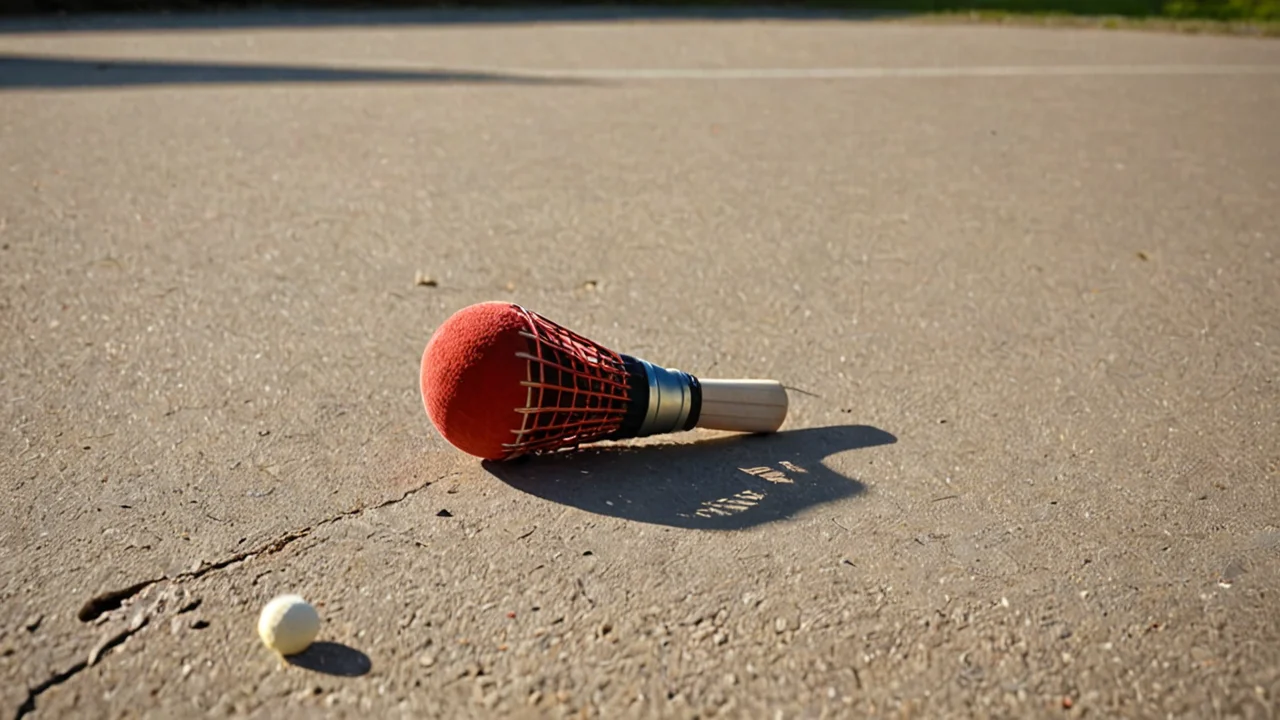
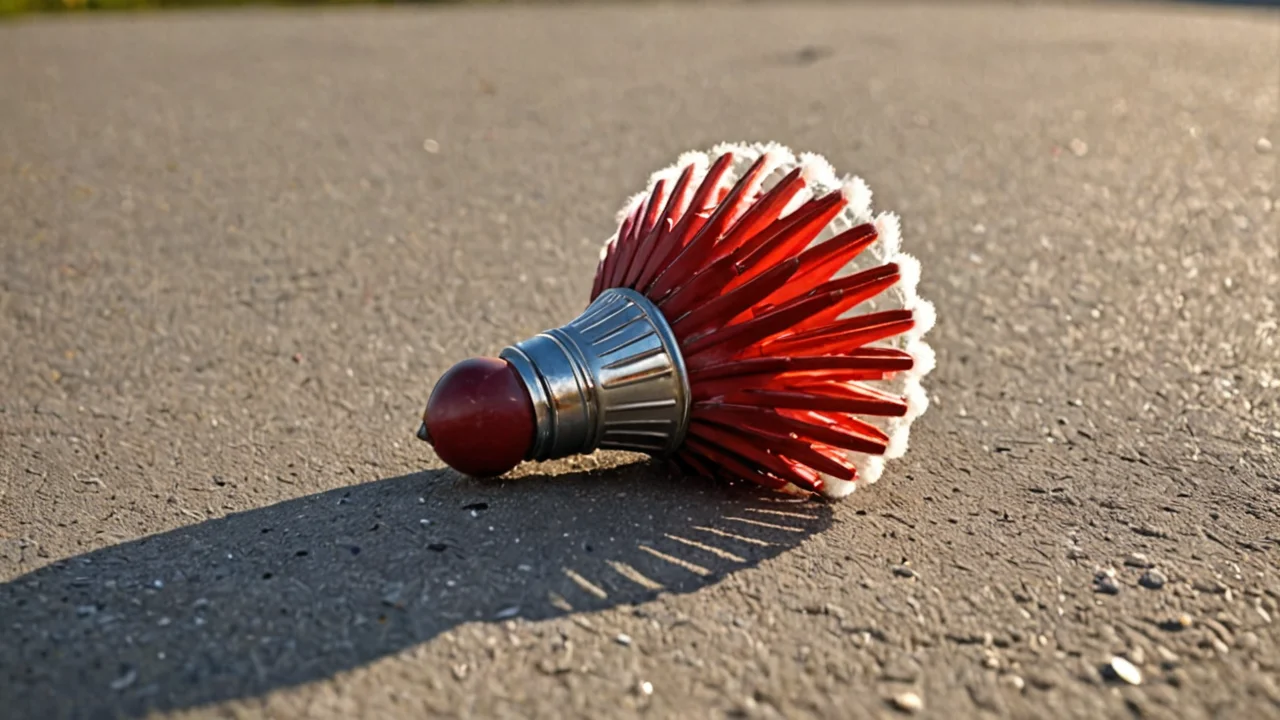
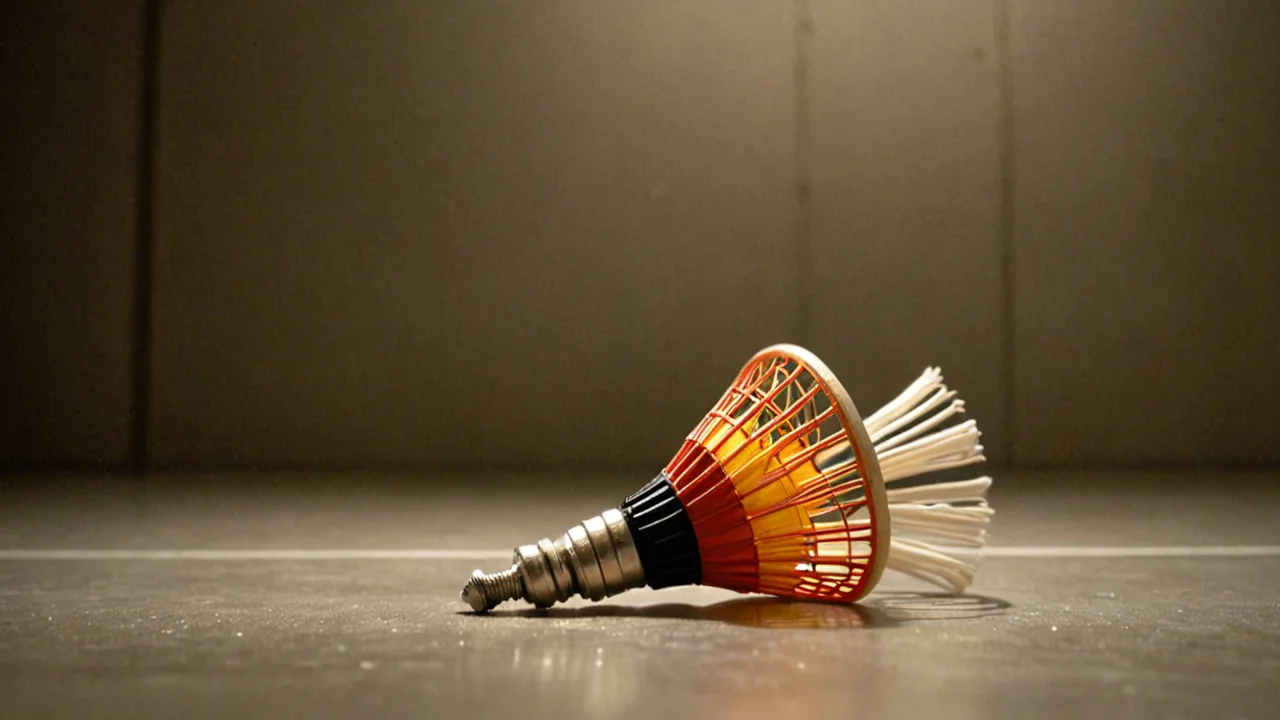
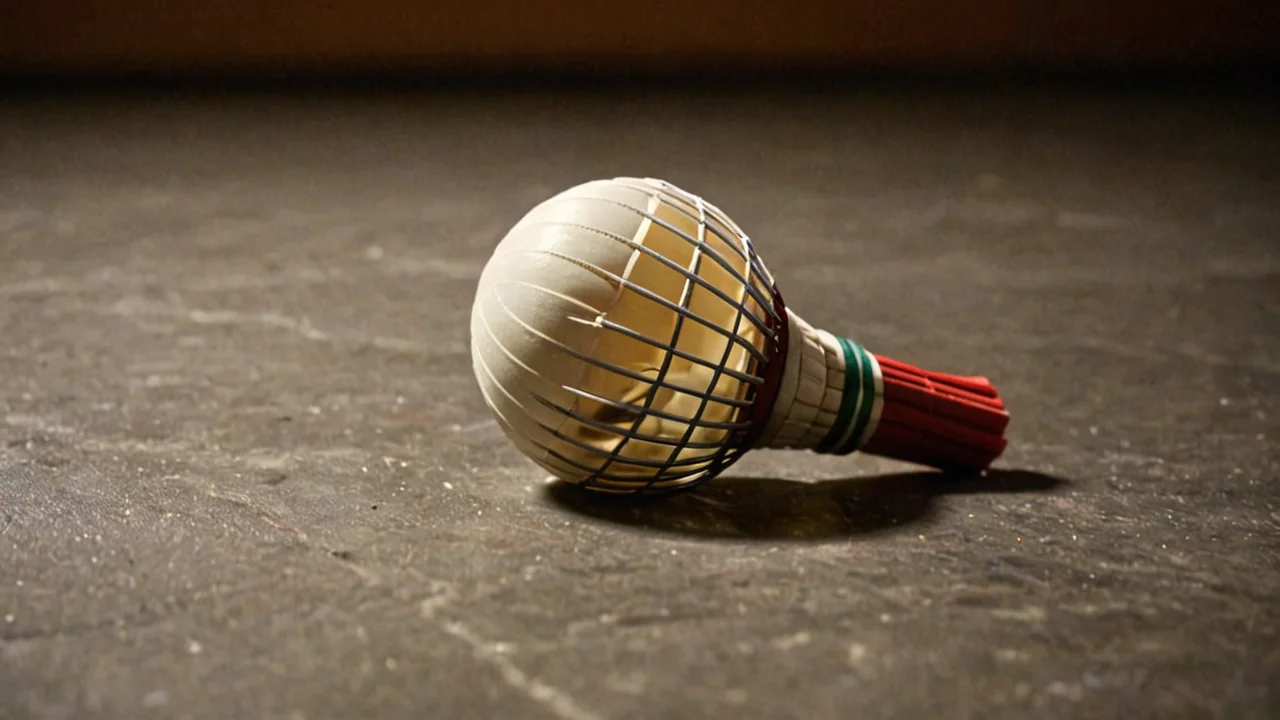
The shuttlecock — the feathered or synthetic projectile designed to be hit over the net — is where beginners lose the most money for the least gain. Feathered shuttles fly true and are the standard for competitive play, but they break. A decent feather shuttle survives a rally or two at hard-hitting pace and then starts to shed. Synthetic shuttles last far longer and cost less, but they fly differently: slower off the racket and less predictable in the last part of the flight. For practice and casual games, synthetic is the sensible default. For match play, feather is what everyone else will be using, and practising with synthetic and competing with feather is a genuine adjustment rather than a psychological one.
| Choice | What it costs you | When it is wrong |
|---|---|---|
| Feather shuttle | Higher cost per session; frequent replacement | Casual or solo practice where durability matters more than feel |
| Synthetic shuttle | Different flight; slower to adapt come match day | Competitive play, where feather is the norm |
| Light, head-light racket | Less power on the smash; more effort to clear from the back | Players whose main problem is reaching the back boundary |
| Heavier, head-heavy racket | Slower to manoeuvre at the net; tires the arm faster | Front-court players and doubles specialists |
The racket decision is the one most beginners get backwards. They buy the lightest, stiffest frame they can find because it feels fast in the shop, then discover they cannot clear the shuttle to the back of the court and their shoulder aches. A more forgiving, slightly head-heavy frame generates easy depth, and depth is the first thing a new player needs. The cost is that it is slower at the net and less fun to swing in a shop. Buy for the shot you cannot yet play, not the one you can.
Grip, strings, and the maintenance nobody tells you about
Restringing is the single most neglected part of badminton equipment. Factory strings on a new racket are generally set for durability rather than playability and go dead long before they snap. Dead strings feel like a board — the shuttle comes off flat, the sound changes, and you start mistiming shots you used to hit cleanly. If your racket has been sitting in a bag for a season, the strings are the first thing to check, not the frame. The trade-off is real: a restring costs a meaningful fraction of a cheap racket, and on a very cheap frame it is not worth it. On anything decent, it is the cheapest performance gain available.
Grip is the other consumable. Overgrips are cheap, they are replaced far more often than most players bother to, and a slick grip is a direct cause of racket slip and, eventually, a thrown racket. Towel grips absorb sweat better in a hot hall; tacky overgrips feel better in a cool one. This is a genuine preference with no correct answer, and anyone who tells you otherwise is selling something.
Footwear gets skipped in every beginner guide and should not be. Badminton involves repeated lunging and hard braking, and running shoes are built for forward motion, not lateral stops. Court shoes have a wider base and a grippier sole, and the difference shows up the first time you try to change direction at speed. The cost is that proper court shoes are ugly and expensive compared with trainers, and nobody outside the hall will see them. That is the deal.
The physical demands: what actually gets tired, and in what order
Badminton is a lunging, overhead sport before it is an endurance sport. The first thing that fails in a new player is not the lungs but the calves and the shoulder, because the movement pattern is repeated explosive lunges to the front corners and repeated overhead reaching from the back. A player who runs regularly but has never lunged will be sore in places they did not know existed after a single session. The practical fix is to warm up the calves and the rotating cuff specifically, not to add another run.
The overhead action is the source of most recreational injuries. The smash is a throwing motion, and a player who has never been taught to rotate through the trunk will try to generate pace from the shoulder alone. That works for a while and then it does not. The warning sign is a shoulder that aches the day after a session rather than during it. If that is happening, the answer is technique work, not rest — the motion is the problem, and rest just delays the recurrence.
What the physical demands do not require is a big gym programme. Badminton rewards mobility in the hips and shoulders and repeated short efforts far more than it rewards raw strength. A player who can get low and change direction cleanly will beat a stronger player who cannot, at almost every level below the top. The trade-off of focusing on movement over strength is that you will lose the purely physical exchanges — the long lifts and the flat drives — until your technique catches up. That is a fair price.
The mental side, and why sports psychology is not just for elites
Sports psychology is the scientific study and application of psychological principles to sport, exercise, and physical activity, including performance and well-being. In badminton specifically, it shows up in two places beginners notice immediately: the inability to close out a game from a lead, and the collapse in concentration after a run of lost points. Both are normal, both are trainable, and neither is fixed by trying harder.
The most useful technique for a recreational player is a between-point routine. Badminton has natural breaks after every rally, and a player who uses those few seconds to reset — turn away, adjust the grip, breathe out, decide the serve — is doing the same thing elite players do, just at a lower level. The alternative, which is what most beginners do, is to carry the last point into the next one, and that is how a two-point deficit becomes a six-point one. The cost of a routine is that it slows the game down and some opponents find it irritating. That is their problem, within the rules.
The limitation of the mental side is that it cannot rescue bad fundamentals. A player who cannot clear to the back of the court will lose to a player who can, no matter how well they manage their between-point routine. Psychology is a multiplier on technique, not a substitute for it, and the honest order of operations is: learn the dimensions and the rules, get equipment that lets you play the shots, build the movement pattern, and only then spend real time on the head. Doing it in that order is slower to feel like progress and much faster to actually produce it. Doing it in reverse is the most common way adults quit a sport in the first season — they buy the expensive racket, lose to someone with better basics, and conclude they are not built for it. They were. They just started in the wrong place.