Buy the discipline before the object. The single most consequential equipment decision in badminton is choosing gear built for the way you actually play — singles or doubles, plastic or feather, club night or league match — because a racket that suits a fast flat doubles game will punish a singles player who needs to lift and rally, and a shuttle that flies right in a cold hall will fly long in a warm one. Everything else on this page follows from that: the racket, the string and tension, the shuttle, the shoes, the court and net you measure against, and the bag that carries it. Get the order right and you spend once. Get it wrong and you accumulate a drawer of almost-right equipment.
What you are actually choosing between
Badminton equipment splits into three tiers of decision, and they cost you in different currencies. First, the fixed objects: racket, shoes, bag. These are one-off purchases you live with for a long time, and the mistake is expensive but recoverable. Second, the consumables: shuttles and strings. These are recurring costs that scale with how often you play, and the mistake here is invisible — you quietly spend more per session than you need to, or you spend less and play with shuttles that won't fly straight. Third, the environment: the court, the net, the hall. You rarely buy these, but you have to know their dimensions because your equipment is tuned to them.
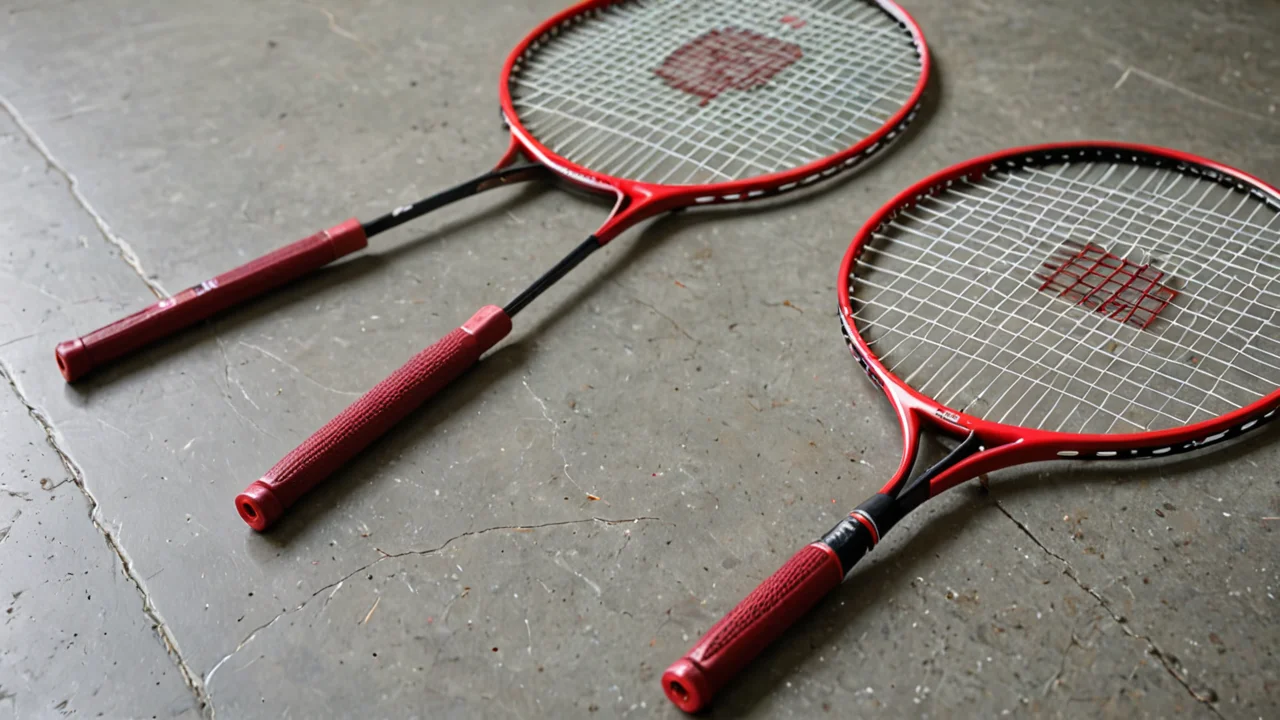
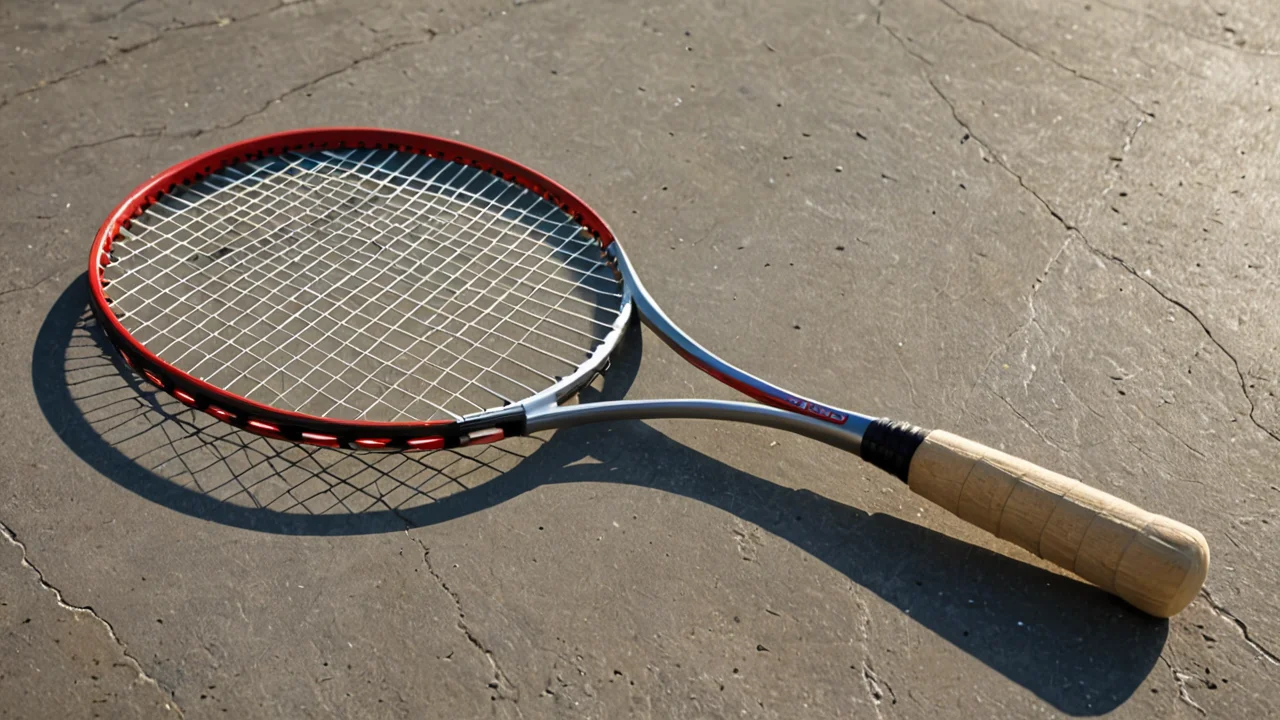
The racket is the piece everyone fixates on, and it's the piece with the most regulated geometry. Official law caps the overall length at 680 mm, and the implement is defined by a maximum overall length and width — the governing body cares about the outer envelope, not the brand story. What that means in practice is that no legal racket is dramatically longer than another; the differences you feel are in weight distribution, shaft stiffness and grip size, not raw dimensions. A head-heavy racket swings slower and hits harder; a head-light one recovers faster for the flat exchanges at the front of a doubles court. Neither is better. They're suited to different jobs, and the job is defined by the discipline.
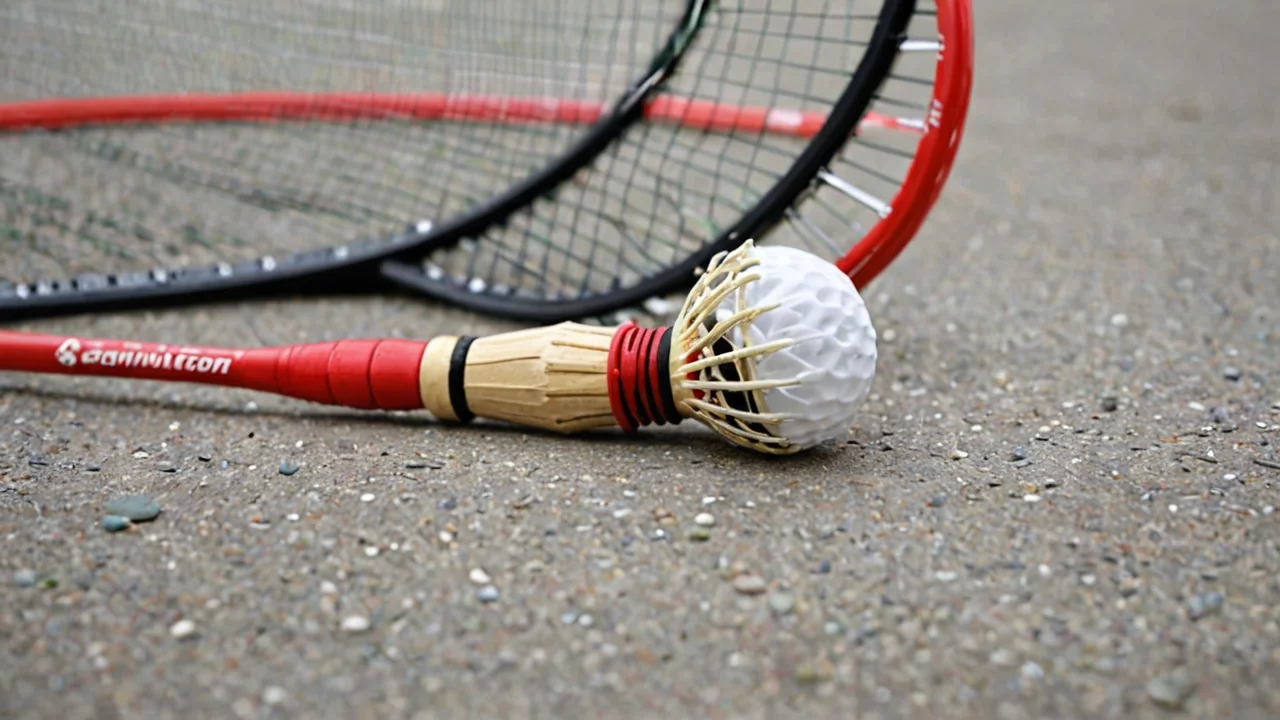
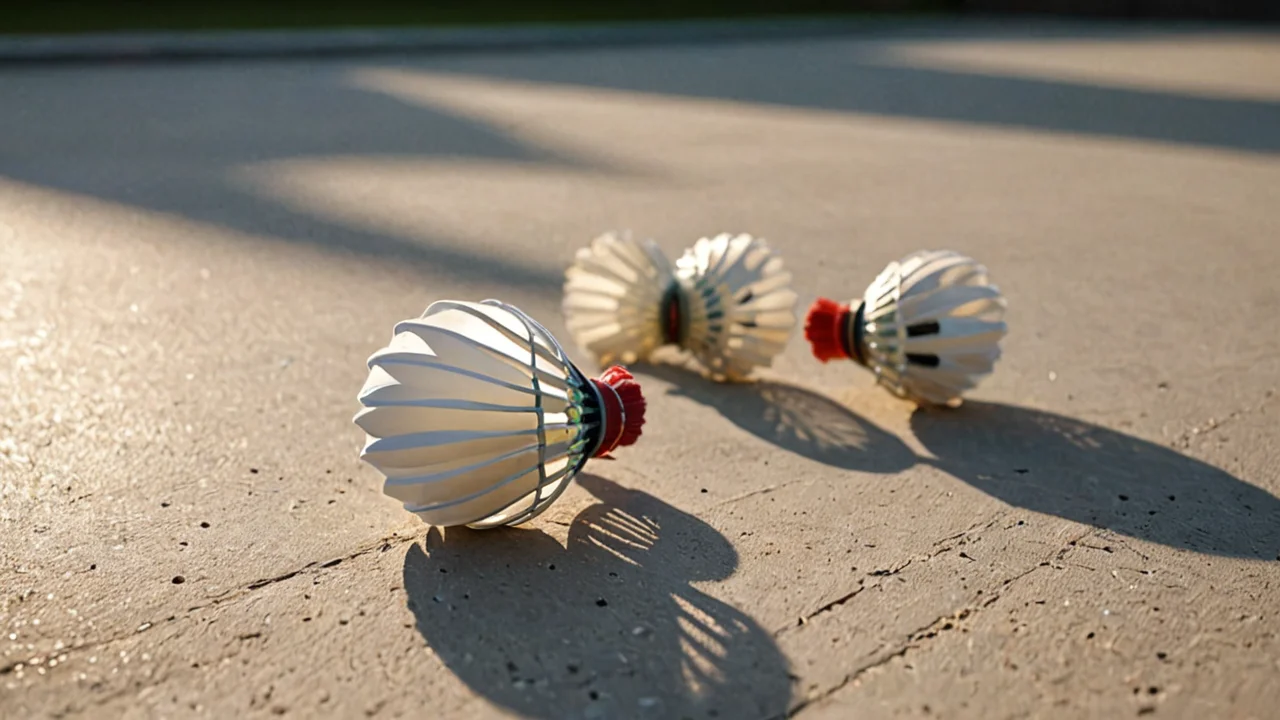
The shuttle is the other half of the equation, and it's where most players under-think. A shuttlecock is a feathered or synthetic projectile designed to be hit over the net, and the feathered and synthetic versions behave differently enough that they change how you play. Feather shuttles decelerate sharply and reward touch; synthetic ones fly more predictably but feel dead on the strings, which pushes players toward harder hitting and away from the soft game — the drop shot, the shot played so the shuttlecock just clears the net and falls quickly near the front of the opponent's court, is the first thing to suffer. If you're learning that shot, a synthetic shuttle will teach you the wrong feel.
The racket decision, in the order that matters
Choose by discipline first, then by weight class, then by shaft stiffness, then by grip size — and only then by brand or paint. Most players do it backwards, falling for a cosmetic or a professional's endorsement and then trying to adapt their game to the frame. The frame doesn't adapt; you do, and the adaptation costs you months.
Singles rewards a head-heavy, medium-stiff frame because you have time and space to generate power from the back of the court, and the extra mass in the head helps you hit through the shuttle on a full swing. Doubles rewards a lighter, faster frame because the game is decided in the front third of the court — the exchanges are short, the racket has to recover between shots, and a slow frame gets beaten at the net. If you play both, you pick the one you play more, or you accept a compromise frame that does neither job perfectly. The honest trade-off is that a compromise racket is a compromise: it will feel slightly slow in doubles and slightly underpowered in singles, and no amount of string tuning fixes that.
Weight class is the next lever, and it's the one most players get wrong by going too light. A lighter racket is easier to swing and easier on the shoulder, but it transfers less momentum into the shuttle, so you have to swing harder to get the same depth — which is fine if your technique is sound and a recipe for arm trouble if it isn't. Heavier frames do more of the work for you but tire you over a long session. The right answer depends on how strong your forearm is and how long your sessions run, not on what a professional uses. Professionals train for hours a day; their racket is tuned to a body that has adapted to it.
Shaft stiffness is the subtle one. A stiffer shaft transmits energy more directly and rewards a fast, clean swing; a flexible shaft bends and stores energy, which helps a slower swing generate power but costs you control on delicate shots. If you're inconsistent, a flexible shaft is more forgiving. If you're consistent, a stiff shaft is more precise. Grip size is the last variable and the cheapest to change — too small and you'll over-grip and blister, too large and you'll lose wrist snap. Most players should start slightly smaller than feels natural and build up with overgrip, because you can always add and you can't easily subtract.
What this approach costs you is time: you need to actually hold and swing several frames before you commit, and the only reliable way to do that is to borrow from clubmates or use a shop that lets you test. What it saves you is the drawer of almost-right rackets. The limits are real — if you're between disciplines or between weight classes, no single frame will feel right, and the correct move is to buy for the majority of your play and accept the compromise rather than buy two frames you can't afford to string.
Strings and tension: the cheapest performance you can buy
Restringing is the highest-leverage equipment spend in the sport, and it's the one players defer longest. A racket's feel comes mostly from the string bed, not the frame, and a dead string bed makes a good frame feel bad. The rule of thumb is that strings lose tension with play and with time, and a racket that's been sitting in a bag for months will feel different from one strung last week even if you haven't hit with it. If your shots are suddenly flying long and your net shots are popping up, suspect the strings before you suspect your technique.
Tension is a trade-off with no free lunch. Higher tension gives you more control and a crisper feel but a smaller sweet spot and less power — it rewards clean contact and punishes mishits. Lower tension gives you more power and a larger sweet spot but less control and a springier, less predictable response on delicate shots. The correct tension is the highest one you can still hit cleanly with, and most players are strung too tight because they've copied a better player's number. Go down a step, play a few sessions, and see whether your control actually suffers or whether you were just told it would.
String type matters less than tension but it isn't nothing. Thin strings feel livelier and bite the shuttle better; thick strings last longer and feel deader. If you break strings often, the economics favor thicker or more durable strings even at some cost in feel, because the restringing labor is a fixed cost per job and a string that lasts twice as long halves your cost per session. If you rarely break strings, you can afford the thinner, livelier option and simply restring on a schedule rather than on breakage. The trap is treating restringing as a repair rather than maintenance: by the time a string snaps, you've usually been playing on a dead bed for a while.
Shuttles: the choice that changes how you play
Feather or synthetic is a genuine fork, not a preference. Feather shuttles are made from goose or duck feathers and they fly with a characteristic sharp deceleration that makes touch shots and net play meaningful. Synthetic shuttles are molded from foam and plastic and they fly more uniformly but with a flatter, faster trajectory and a harsher feel on the strings. The practical consequence is that feather rewards a soft game and synthetic rewards a hard one, and if you practice with synthetic and compete with feather, your drop shot and your net dribble will be calibrated wrong.
The cost structure is the other half of the decision. Feather shuttles are expensive per shuttle and they degrade — a feather shuttle that's been hit hard loses flight quality quickly, and club players often rotate through several in a session. Synthetic shuttles last far longer and cost less per unit, which is why they dominate casual and school play. The honest trade-off is that synthetic is cheaper per session but teaches a different game; feather is more expensive per session but it's the shuttle the sport is actually played with at competitive level. If you're training for competition, practice with what you'll compete with, and budget for it as a recurring cost rather than a one-off.
Speed grading is the variable most players ignore and then blame on the hall. Shuttles are graded for speed, and the correct grade depends on temperature and altitude — a shuttle that's right in a cold hall will fly long in a warm one, and a shuttle that's right at sea level will fly differently at altitude. The symptom is consistent: your clears sail long, your drops land short, and you adjust your swing to compensate, which wrecks your technique. If you're playing in a new hall, test a few shuttles before you commit to a grade, and don't assume the grade you bought last winter is right for this summer.
Shoes, the court and the net: the environment you play in
Court shoes are the equipment decision with the highest injury cost and the lowest glamour. Badminton is played on a wooden or synthetic surface with a lot of lateral movement, and a running shoe — designed for forward motion and a cushioned heel — will roll your ankle on a lunge. Court shoes have a low, wide base and a grippy sole tuned to the surface, and the difference is not subtle once you've felt it. Buy for the surface you play on; a sole that grips too hard on a dusty floor will catch and twist your knee, and one that's too slick will slide out from under you on a lunge.
The court and net dimensions are fixed, and knowing them is how you calibrate everything else. The court is 13.40 m long and 6.1 m wide for doubles, and the net stands 1.55 m at the posts and 1.52 m at the center — the sag is deliberate, not a defect. That sag matters because it changes the trajectory of a net shot: the shuttle has to clear a lower point at the center and a higher one at the posts, which is why the cross-court net shot is a different shot from the straight one. If you're setting up a home or club court, measure the net at the posts and at the center, because a net set to a single height will be wrong at one end or the other.
The hall itself is equipment you don't buy but must account for. Draughts move shuttles, ceiling height limits your clears, and the floor surface dictates your shoe choice. A hall with a low ceiling teaches you to play flatter, which is fine for doubles and limiting for singles. A hall with a strong draught makes feather shuttles unpredictable and pushes players toward synthetic for consistency — a reasonable compromise for casual play and a bad habit for competition. The trade-off is always consistency versus realism: the environment that's easiest to play in is rarely the one you'll compete in, and equipment chosen for comfort will let you down when it matters.
Building the bag without wasting money
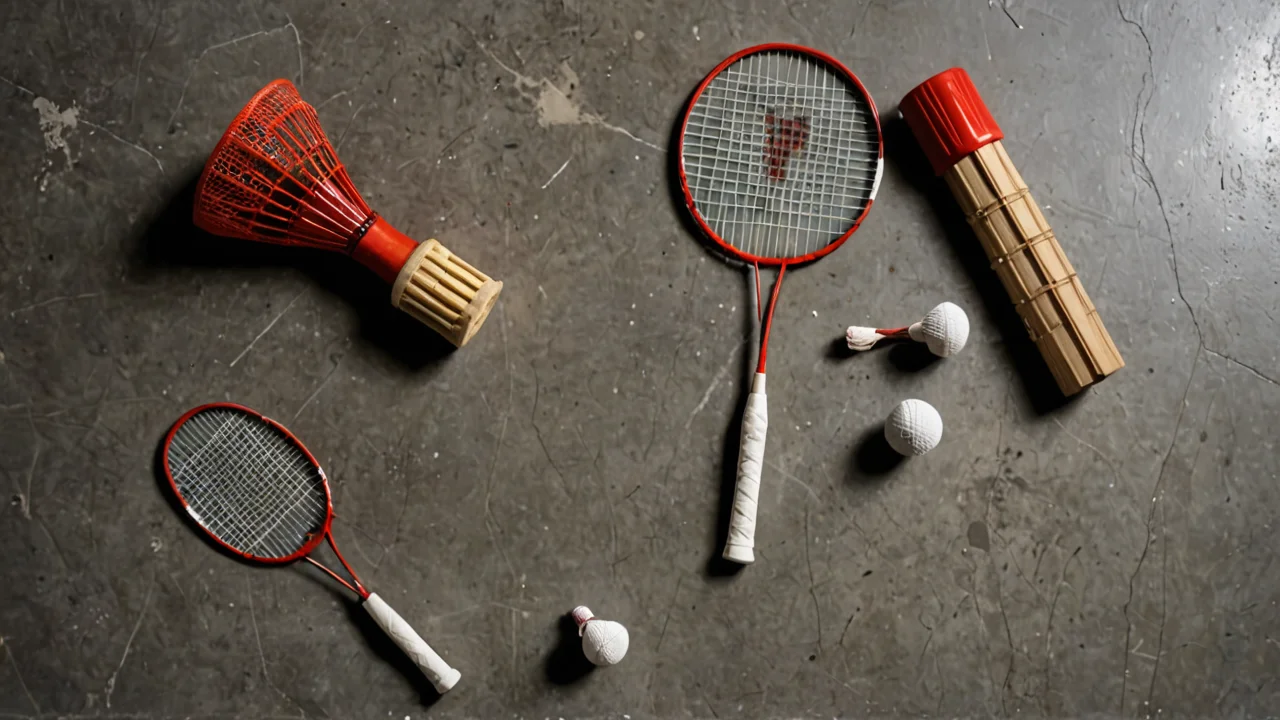
Buy in this order: shoes, then a racket suited to your main discipline, then a restring on a schedule, then shuttles matched to your level and hall, then a bag big enough for all of it. Shoes first because they're the injury-prevention purchase and the one where a cheap choice costs you most. Racket second because it's the largest single spend and the one where discipline-matching matters most. Restringing third because it's the cheapest performance gain and the one players defer. Shuttles fourth because they're recurring and you should buy the grade that matches how you play, not the cheapest bag. Bag last because it's the least consequential and the easiest to get right once you know what you're carrying.
What this costs you is mostly discipline: the willingness to test before you buy, to restring before the strings die, and to buy shuttles by the grade rather than the price. What it saves you is the accumulation problem — the three rackets you outgrew, the shoes that hurt, the bag of shuttles that fly wrong in your hall. The limits are honest: if you play several disciplines at several levels, no single bag is optimal, and the correct move is to accept that your equipment is tuned to your most common game and to adjust your expectations for the rest. Equipment selection is not about finding the best gear. It's about finding the gear that matches the game you actually play, and then maintaining it rather than replacing it.