The most essential features of tournament management software are robust real-time scoring capabilities, flexible bracket generation, and seamless digital registration to manage the entire event lifecycle from sign-up to final results.
01
The most essential features of tournament management software are robust real-time scoring capabilities, flexible bracket generation, and seamless digital registration to manage the entire event lifecycle from sign-up to final results.
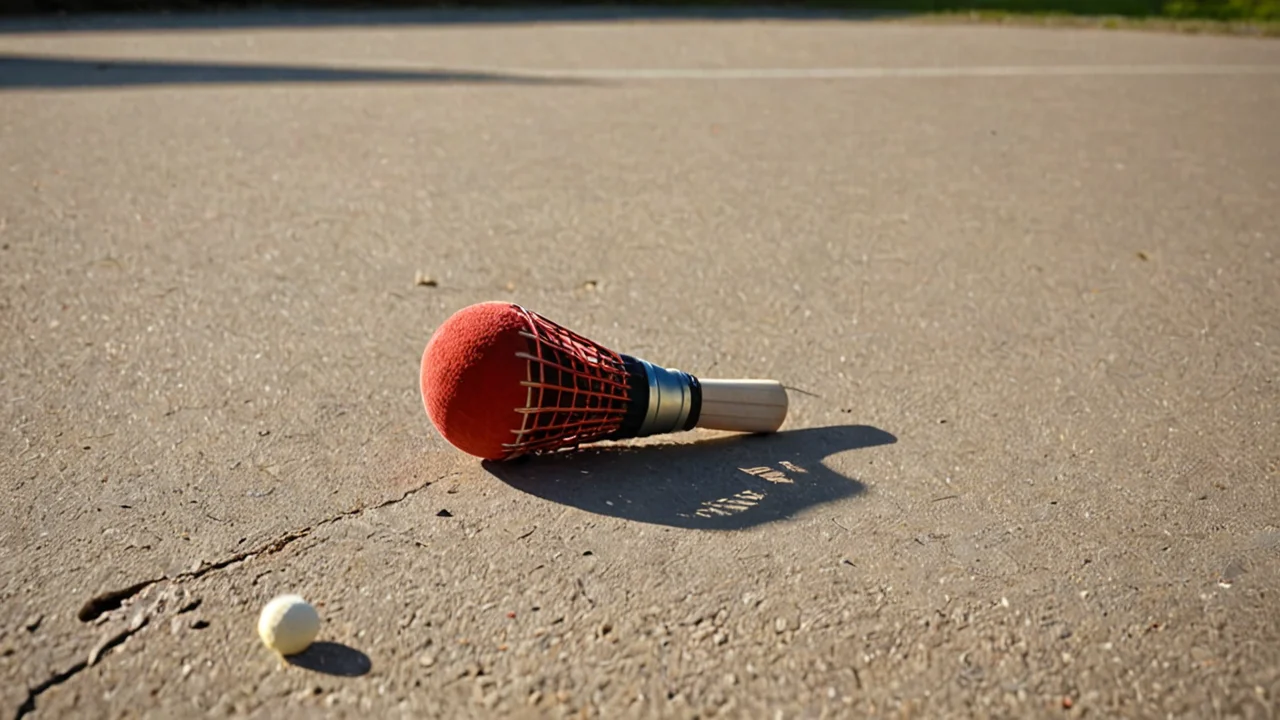
If I had to choose a sport that demands a more specialized, grueling form of athleticism under specific conditions, I would pick badminton over tennis.
Read
When booking badminton courts, always verify if your desired slot accounts for mandatory warm-up time and whether the venue requires a minimum block of 90 minutes rather than just an hourly rate…
Read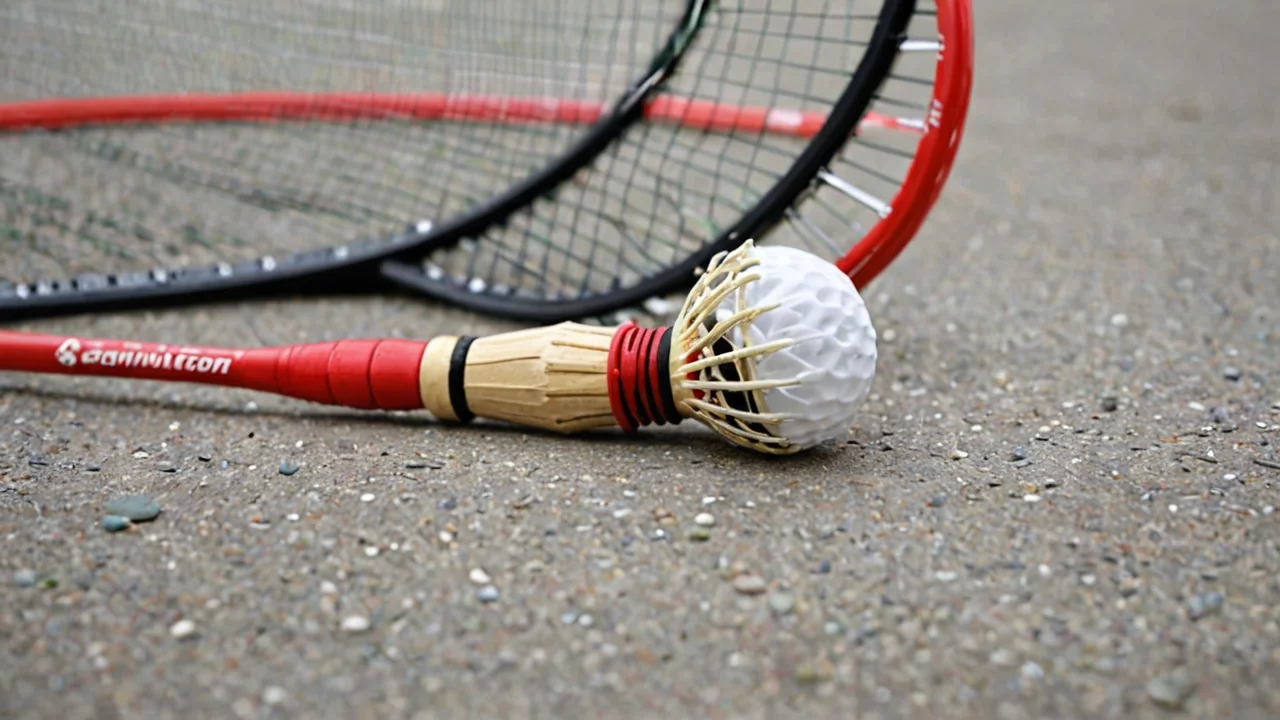
Modern badminton has standardized its core implements—the racket, shuttlecock, and court dimensions—but recent refinements in composite materials and specialized string tensions have dramatically…
Read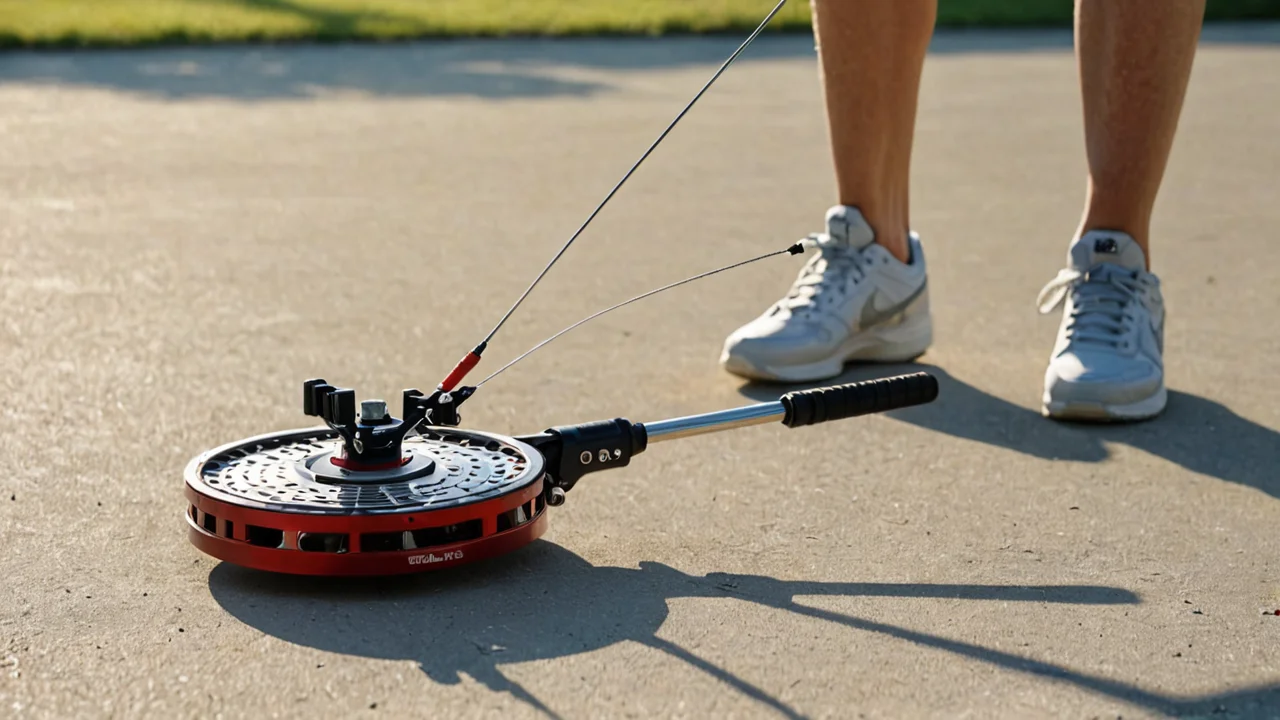
When selecting a badminton racquet stringing machine, you should prioritize models that offer adjustable tension ranges (ideally covering between 18 lbs and 32 lbs) and feature robust electronic…
Read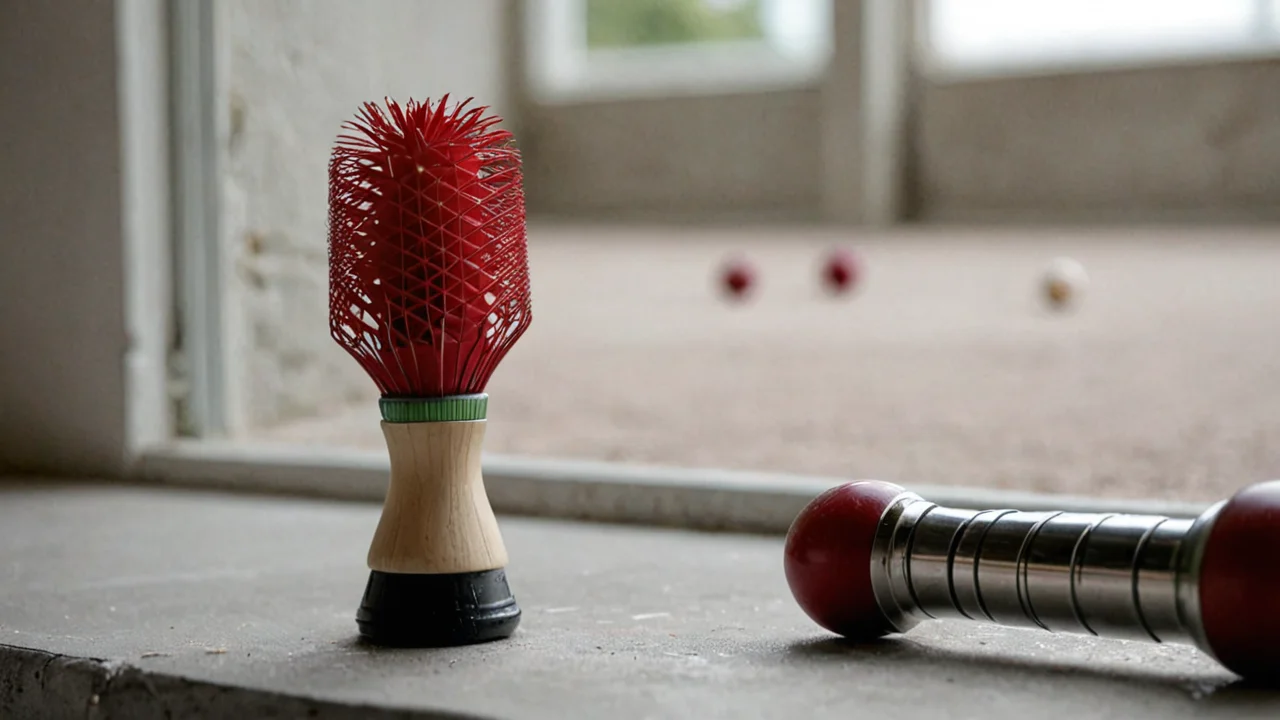
If you notice your opponents are consistently hitting deep cross-court rallies, favoring placement over sheer power, switching to a synthetic shuttlecock might give you the necessary consistency…
Read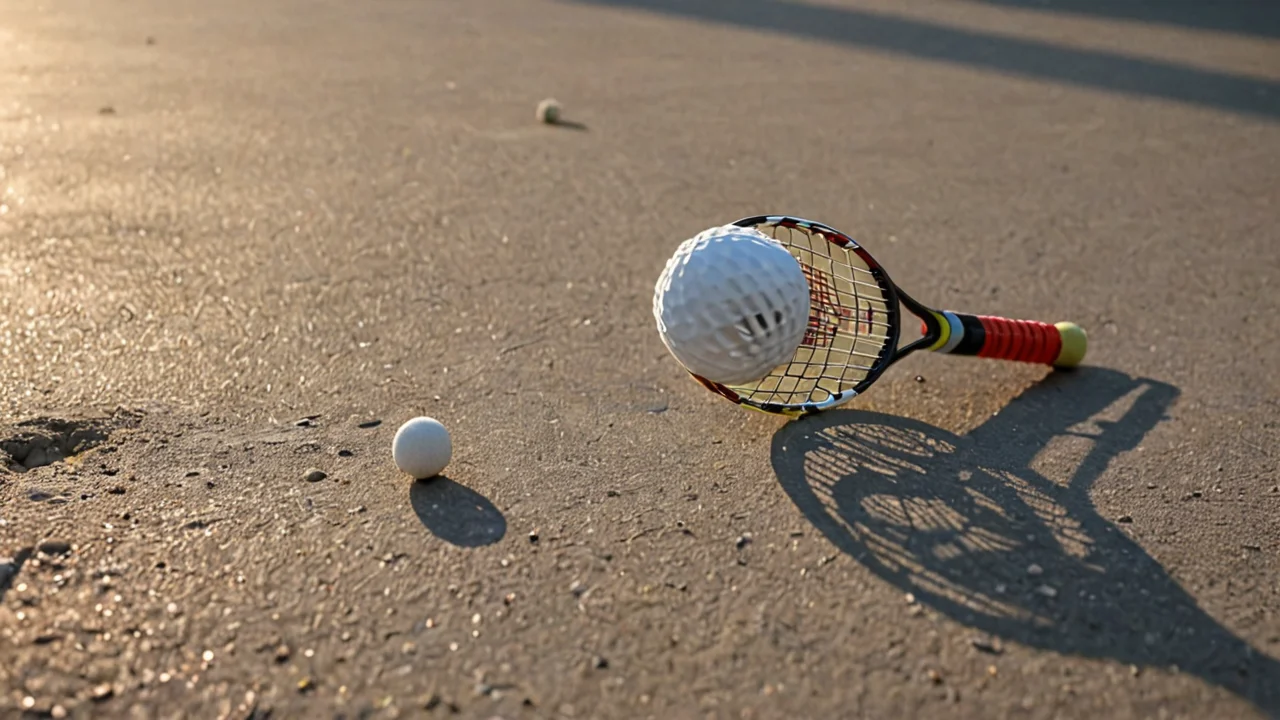
The effective badminton drop shot relies on generating maximum deceptive pace while minimizing vertical lift, allowing the shuttlecock to just clear the 1.52 m net height at the center…
Read
“How does the weight and design of the shuttlecock affect its flight path?”…
Read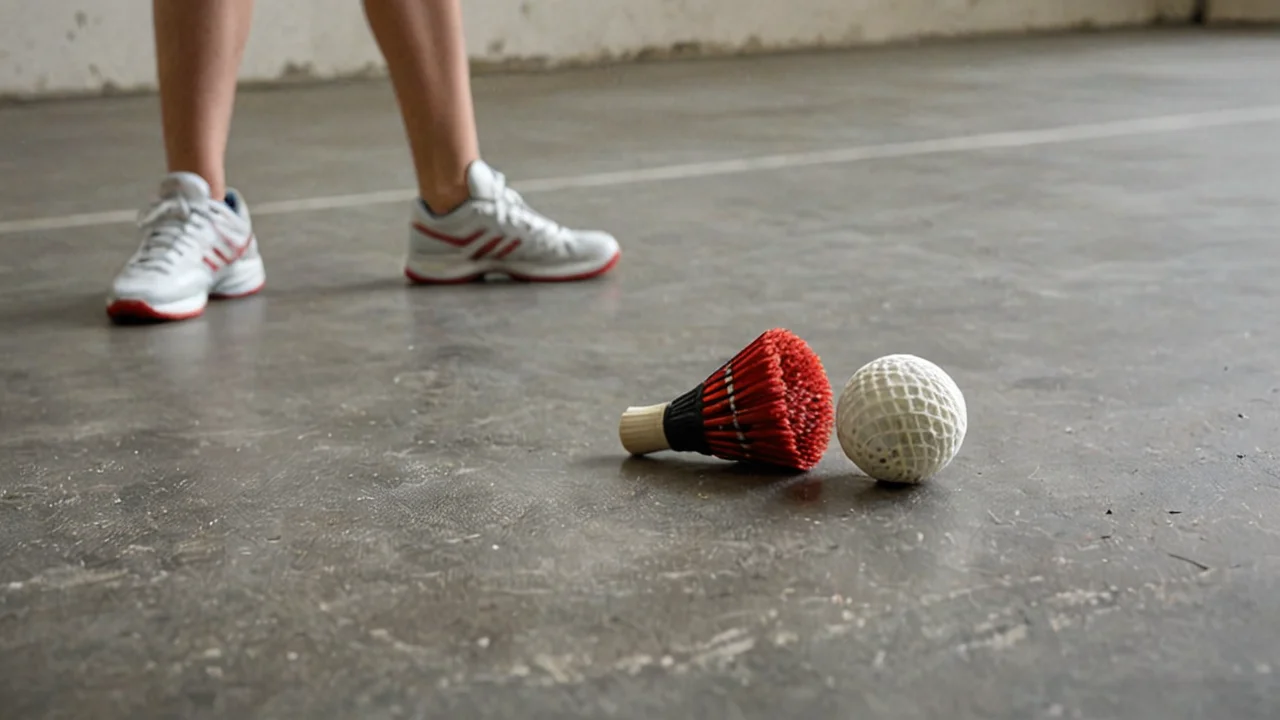
The most significant technical difference between badminton and tennis comes down to projectile physics and available space: in tennis, the heavy ball allows for deep topspin and large angles across…
Read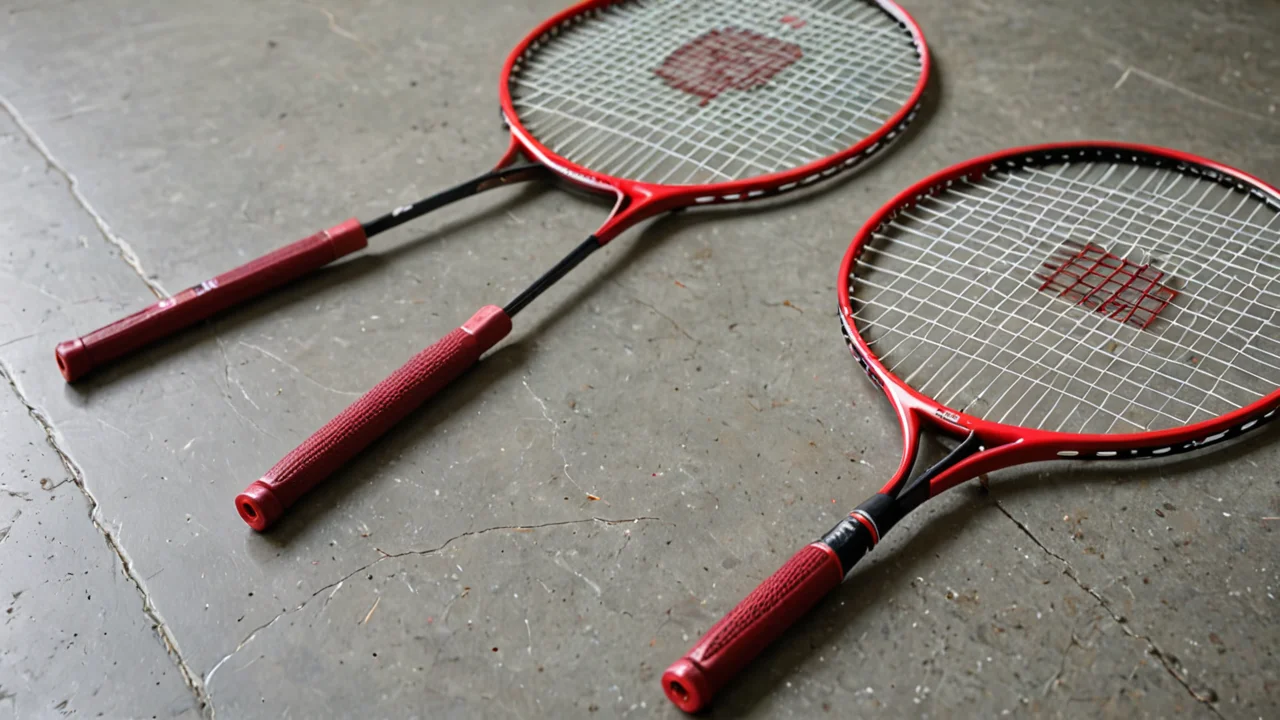
When selecting a high-performance badminton racket, you must first determine your primary play style: if you favor defense and control over sheer power, look for rackets with thicker cross-sections…
Read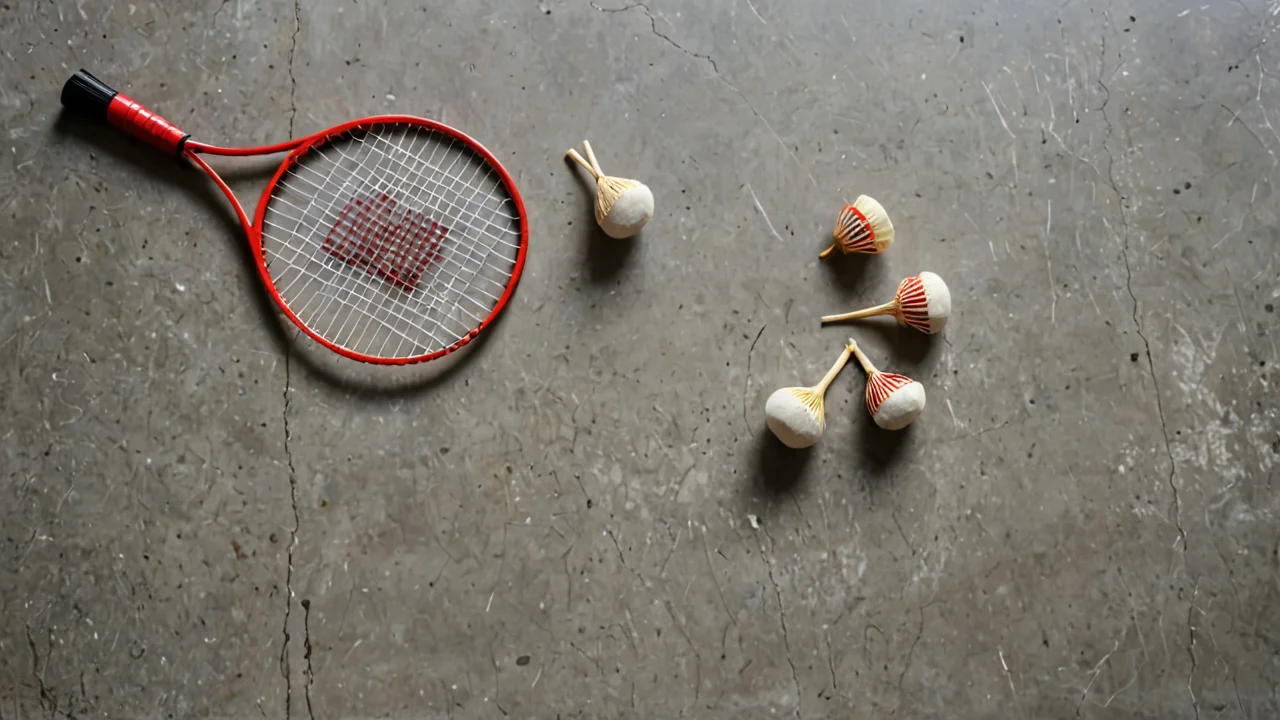
When you look at a professional match, the most immediate technical detail that defines the challenge of badminton is the court geometry; specifically, understanding that while the official BWF law…
Read
The choice between synthetic and feather shuttles hinges entirely on your playing conditions, with natural feathers offering unparalleled flight consistency indoors while synthetics are necessary…
Read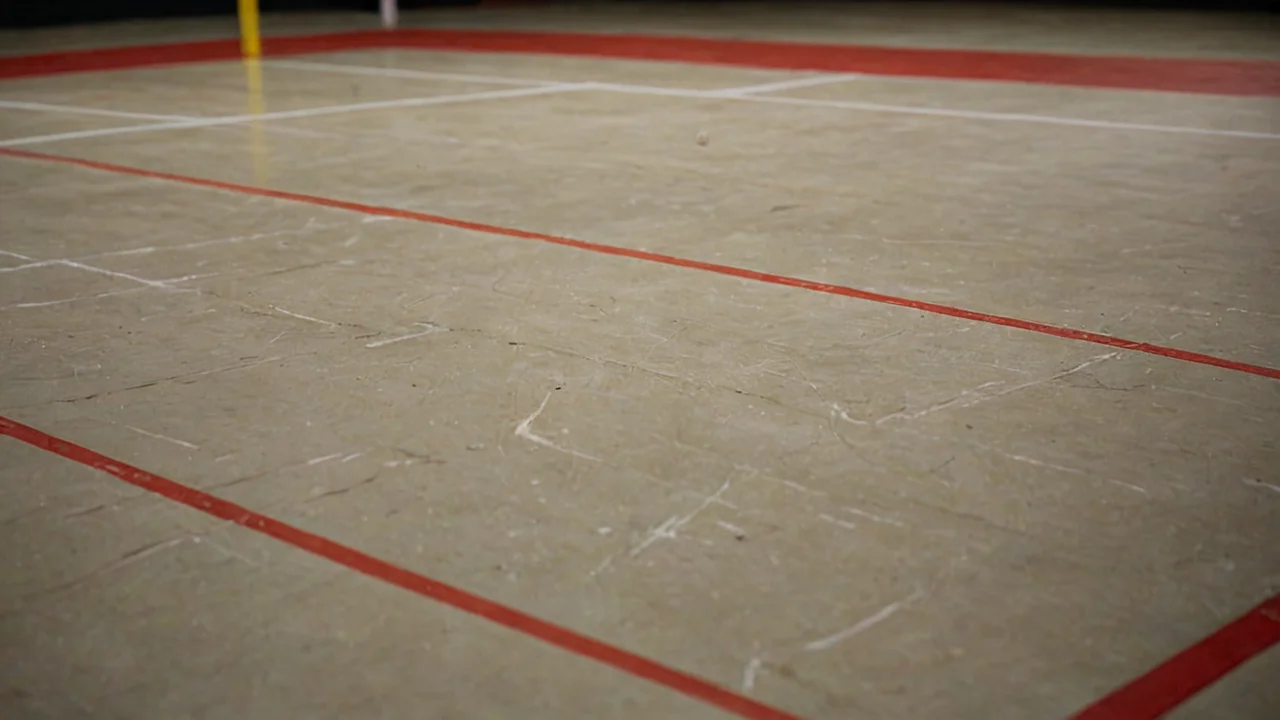
The professional badminton court measures 13.40 m in length, with a playing width for doubles set at 6.1 m.
ReadSport, as this site treats it, is a set of measurable constraints — a court 13.40 m long, a net 1.55 m high at the posts and 1.52 m at the centre, a racket no longer than 680 mm — inside which people make decisions under time pressure, and those decisions are what's actually worth reading about. The rules tell you what's legal. The interesting part is what a player does with the half-second the rules leave them.
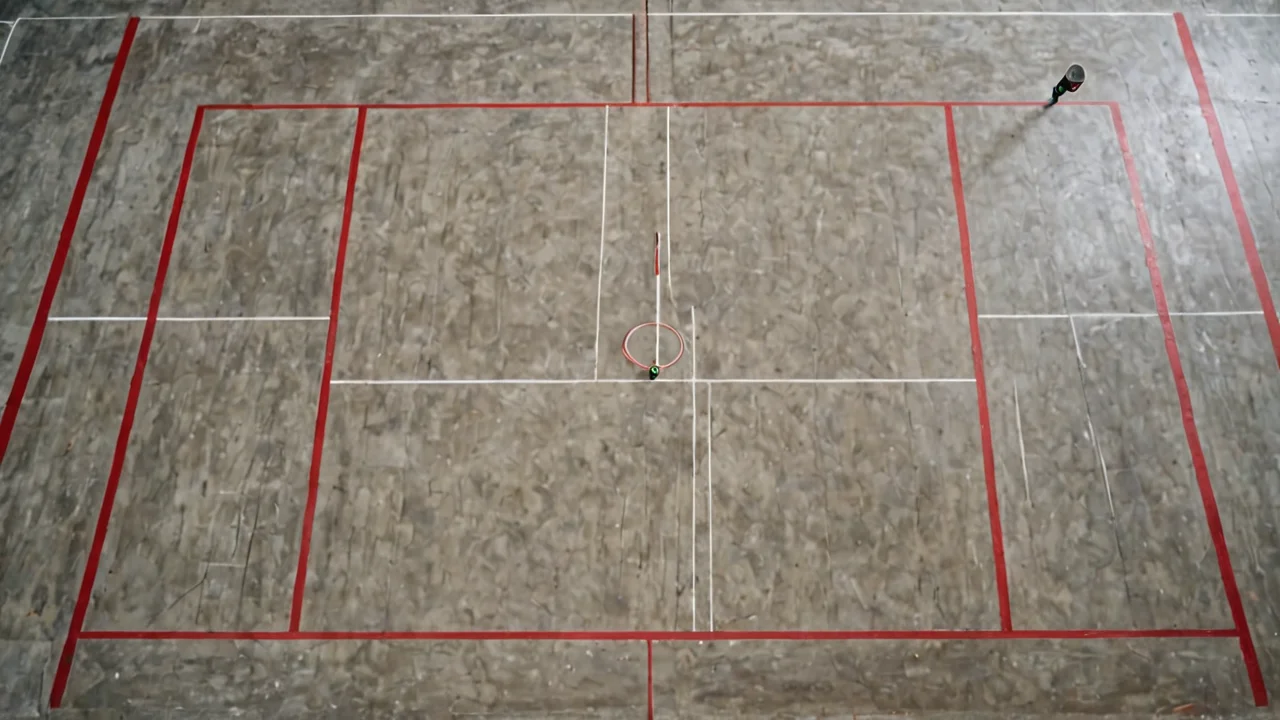
A badminton court is 13.40 m long and 6.1 m wide for doubles, with the net at 1.55 m at the posts and sagging to 1.52 m at the centre. Those numbers aren't trivia. They explain nearly everything about how the sport is played at a high level, and once you know them you can watch a match and see the geometry doing the work.
The sag is the first thing to notice. The net is lower in the middle than at the edges, which means the straight drop — the soft shot played so the shuttle just clears the net and falls quickly near the front of the opponent's court — is a different proposition from the same shot played cross-court toward the posts. A player who can consistently drop straight has a shot that clears 1.52 m rather than 1.55 m, and over the course of a long rally that margin is the difference between a tight net cord and a floater. Good singles players build their whole attacking pattern around this: they don't need to hit harder, they need to hit to the part of the net that's lower.
The width matters more in doubles. 6.1 m across, with two players covering it, means the sidelines are reachable but the middle is contested. This is why doubles defence is played in a flat, side-by-side shape rather than front-and-back: the angles that beat you are the ones through the middle, not down the tramlines. Watch a pair that defends front-and-back and you'll see them lose the same point repeatedly — a flat drive between them, neither player committed, shuttle on the floor. The fix is positional, not technical, which is why it's one of the easier things to coach and one of the harder things to remember mid-rally.
The length governs the whole economy of the game. 13.40 m is long enough that a clear to the back corner takes real time to travel and short enough that a good player can cover it. That tension — the back court is far but not that far — is why the attacking clear and the drop shot have to look identical off the racket. If the defender can read which one is coming from the swing, the length of the court stops protecting you.
What this costs: learning the geometry properly means spending sessions on nothing but placement, with no scoring, no intensity, no satisfaction. It's dull. Players who skip it plateau at a level where they hit hard and lose to people who hit soft in the right place.
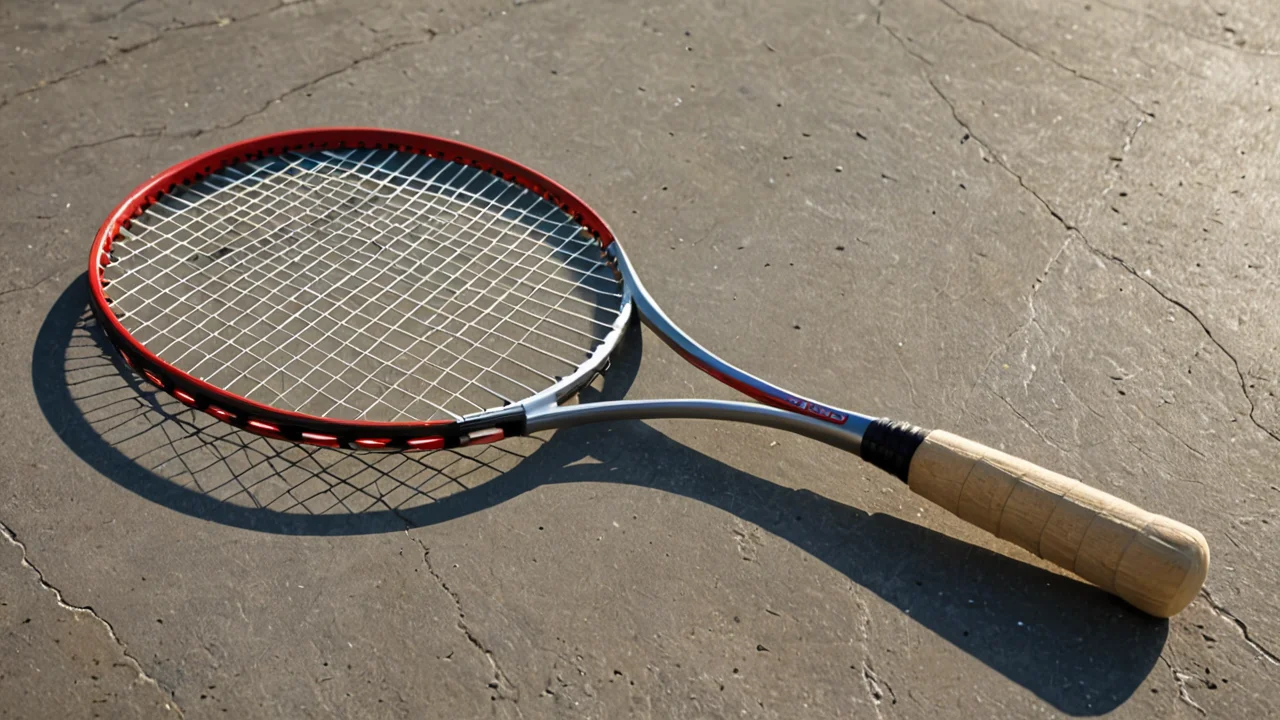
The racket's maximum overall length is 680 mm, and the laws also set a maximum width. That's the entire hard constraint on the implement. Everything else — balance point, shaft stiffness, string tension, grip size — is unregulated, which is why two rackets that both pass the same measurement can feel like different sports.
The practical consequence is that equipment choice is a fit problem, not a quality problem. A head-heavy racket generates more momentum through the swing, which helps a player who is late to the shuttle and hurts a player whose timing is already good. A stiff shaft transfers energy more directly and punishes off-centre contact harder. String tension is the same trade: tighter strings give control and a crisp feel on clean contact, looser strings give a trampoline effect and forgiveness on mishits. None of these are upgrades. They're trades, and the right trade depends on where your contact point actually is, not where you'd like it to be.
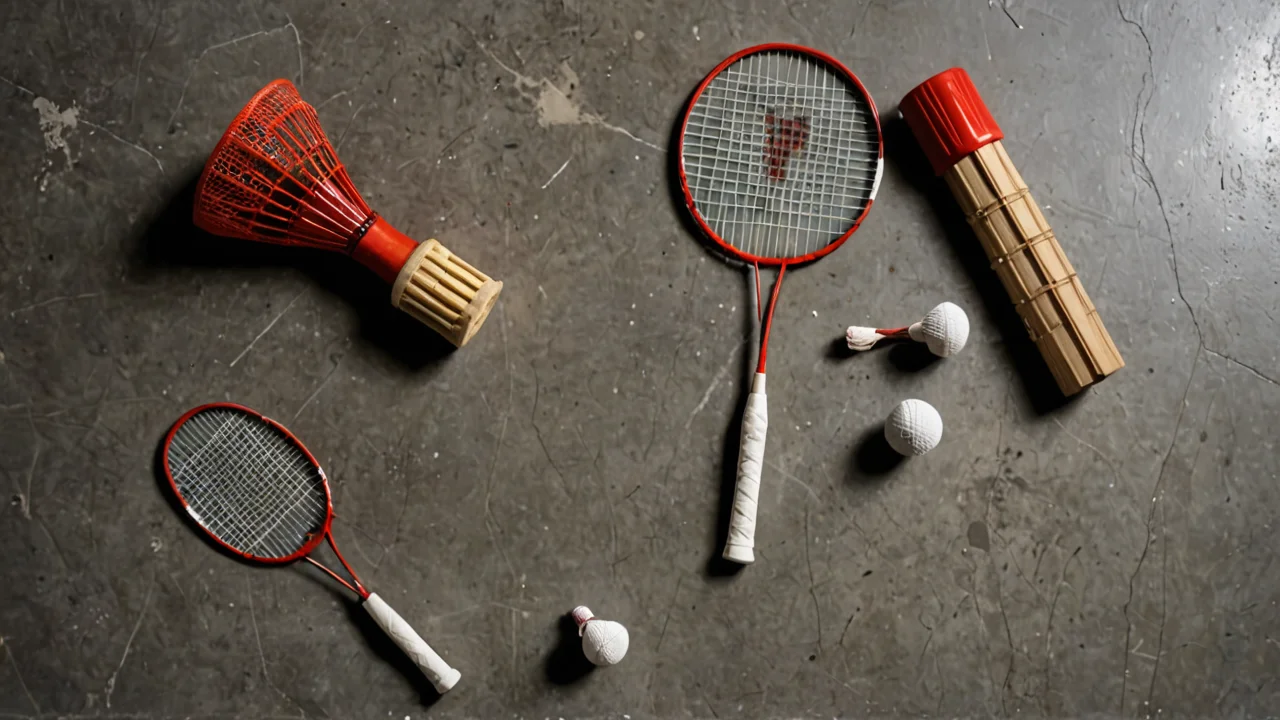
The shuttlecock is the other half of the equation. Feathered shuttles fly differently from synthetic ones — feather decelerates faster and behaves more predictably at the end of its flight, which is why serious competition uses it. The cost is real: feather shuttles are fragile, and a hard-fought match can destroy several. Synthetic shuttles last far longer and are standard for club play and training, but the flight is different enough that a player who only trains synthetic will misjudge the length of clears in a feather match. If you're preparing for competition, the training shuttle has to match the match shuttle, or your timing is calibrated to the wrong object.
The honest caveat: for a beginner, none of this matters yet. A cheap racket with fresh grip and a tube of synthetic shuttles will carry you through the stage where the limiting factor is footwork and hand-eye coordination. Equipment becomes decisive later, and by then you'll know what you want because you'll have a specific complaint — "I'm late on my backhand" or "the shuttle keeps flying long" — rather than a general sense that better gear would help.
Most points at a decent level follow a shape: a serve or lift that starts neutral, a phase where both players probe the back corners, and then a moment where someone gets the shuttle below net height and the point tilts. Understanding that sequence is more useful than memorising shots, because it tells you what to watch for.
The neutral phase is mostly clears and drops, both hit to the back corners, both intended to move the opponent and buy time to recover to base. The player who wins this phase isn't the one hitting harder — it's the one whose clears land deeper and whose drops land tighter, so the opponent is always travelling further than they are. This is where the drop shot earns its keep. A drop that just clears the net and falls quickly near the front forces the opponent to travel the full 13.40 m forward, and if they get there late, the next shot is a lift they can't control.
The tilt happens when someone takes the shuttle early and flat. A flat drive through the midcourt, especially through the middle in doubles, removes the opponent's time to set up. From there, the point becomes a race: whoever gets the shuttle above net height first can attack downward, and whoever is stuck below net height is lifting, and lifting is losing.
What goes wrong, and how you notice: a player who loses the neutral phase starts trying to win points with harder shots from worse positions. You'll see it as increasing error rate on smashes that land in the net or fly long, while the safe clears stay in. That's not a technique failure, it's a tactical one — the player has decided the rally is unwinnable and is gambling. The fix is to slow the rally down, hit higher and deeper, and re-enter the neutral phase rather than trying to skip it.
The limit of this framing: at the very top level, the neutral phase barely exists. Players take the shuttle early from the serve and the point is decided in three or four shots. The sequence above is a club-and-amateur model, and it's useful precisely because most players live there.
Sports psychology is the scientific study and application of psychological principles to sport, exercise, and physical activity, including performance and well-being. That definition matters because it separates the field from the folk version — the idea that mental strength is something you either have or don't. It's a set of techniques with evidence behind them, and they're trainable.
The techniques that hold up under scrutiny are unglamorous. Pre-performance routines — the same sequence of actions before every serve, every free throw, every penalty — reduce the variability that comes from a wandering attention span. Attention control, which is the practice of deliberately narrowing and widening focus, is trainable and shows up as a player who can lock in for a rally and then genuinely switch off between points instead of carrying the last error forward. Arousal regulation, which is the clinical term for managing nerves, is about finding the right level of activation rather than eliminating it: too flat and reaction time drops, too wired and fine motor control goes.
What this costs: it's slow, it's boring, and it doesn't feel like training. A player will happily spend an hour on footwork drills and resist five minutes of routine practice because the footwork has visible feedback and the routine doesn't. The visible payoff comes later, in the specific situation where the routine is the only thing standing between a player and a collapse — and by then it's too late to build it.
The honest limitation is that psychology is not a substitute for skill. A player with excellent arousal control and poor footwork loses to a player with poor arousal control and excellent footwork, most of the time. The mental work raises the ceiling on what your technique can deliver under pressure; it doesn't raise the technique. Anyone selling it as the former is selling something else.
A week that produces improvement has three distinct kinds of session, and confusing them is the most common training error. Technical sessions build the stroke — high volume, low intensity, lots of repetition, deliberately boring. Physical sessions build the capacity to repeat the stroke — footwork patterns, court movement, conditioning. Match-play sessions test whether the stroke survives contact with an opponent who is trying to make you fail.
The mistake is turning every session into match play because it's fun. Match play gives you feedback on what you already do well and almost no feedback on what you can't yet do, because you avoid the things you can't do. A player who only plays matches will plateau at the level their current strengths allow and will never develop the shot they're avoiding. The technical session exists to make the avoided shot boring enough that it shows up in a match by accident.
The second mistake is the reverse: endless technical drilling with no match play. That produces a player whose strokes look good in isolation and disappear under pressure, because the technical session has no consequence and the match has nothing but. The two have to be sequenced — build the stroke, then test it under load, then build the next thing.
What this costs is time and scheduling. Three session types in a week means at least three slots, and most amateur players have two. The realistic compromise is to fold the physical work into the technical session — footwork drills that also condition — and to accept that match play is the one that gets cut when the week is tight, because it's the one that feels most like a reward and is therefore easiest to defer. That's backwards. Match play is the diagnostic; without it you don't know what the technical sessions should be fixing.
The limit: this structure assumes a player with a coach or at least a training partner who will feed shuttles. Solo technical work is possible but much less efficient, and the honest advice for a player with neither is to prioritise match play and steal technical work in the warm-up.
Watching elite sport teaches tactics and pattern recognition, and it teaches them well — but only if you watch for the thing the camera doesn't show. Broadcast coverage follows the shuttle, which means it shows you the shot and hides the movement that made the shot possible. A player watching for entertainment sees a smash; a player watching to learn sees the three steps before it that put the smasher in position.
The fix is to watch the feet, not the shuttle. In badminton, watch how the player recovers to base after each shot — whether they're balanced, whether they're already moving before the opponent strikes. In any sport, watch the player without the ball or the shuttle. That's where the tactical information lives, and it's the part that doesn't make the highlight reel.
Playing teaches something watching can't: the felt sense of time. A drop shot that looks leisurely on television is, in the body, a scramble — you have less time than the image suggests, and no amount of watching calibrates you to that. This is why players who watch a lot and play a little tend to overestimate how much time they have and get caught flat-footed at the front court.
The complementary mistake is a player who plays a lot and watches nothing. They develop habits that work against their regular opponents and have no model for what better play looks like, so they can't self-correct. Watching gives you the reference point; playing gives you the calibration. Neither substitutes for the other, and the cost of leaning on one is a plateau that feels like a talent ceiling but is actually an information gap.
The limit of watching as a learning tool: it's passive, and passive exposure produces familiarity rather than skill. You can watch a hundred matches and still not know what a drop shot feels like off the racket. The useful version is deliberate — pick one thing to watch for, watch a set, then go play and try it.
| Decision | What it buys | What it costs |
|---|---|---|
| Technical drilling over match play | Strokes that survive pressure | Time, boredom, no immediate feedback |
| Match play over drilling | Diagnosis of what's actually failing | Plateau at current strengths |
| Feather shuttles in training | Timing calibrated to competition | Cost, fragility, frequent replacement |
| Head-heavy, stiff racket | Momentum, direct energy transfer | Punishes late contact and mishits |
| Watching elite matches | Tactical pattern recognition | Passive; no felt sense of time |
| Mental skills routine | Performance held under pressure | Slow, invisible, easy to skip |